
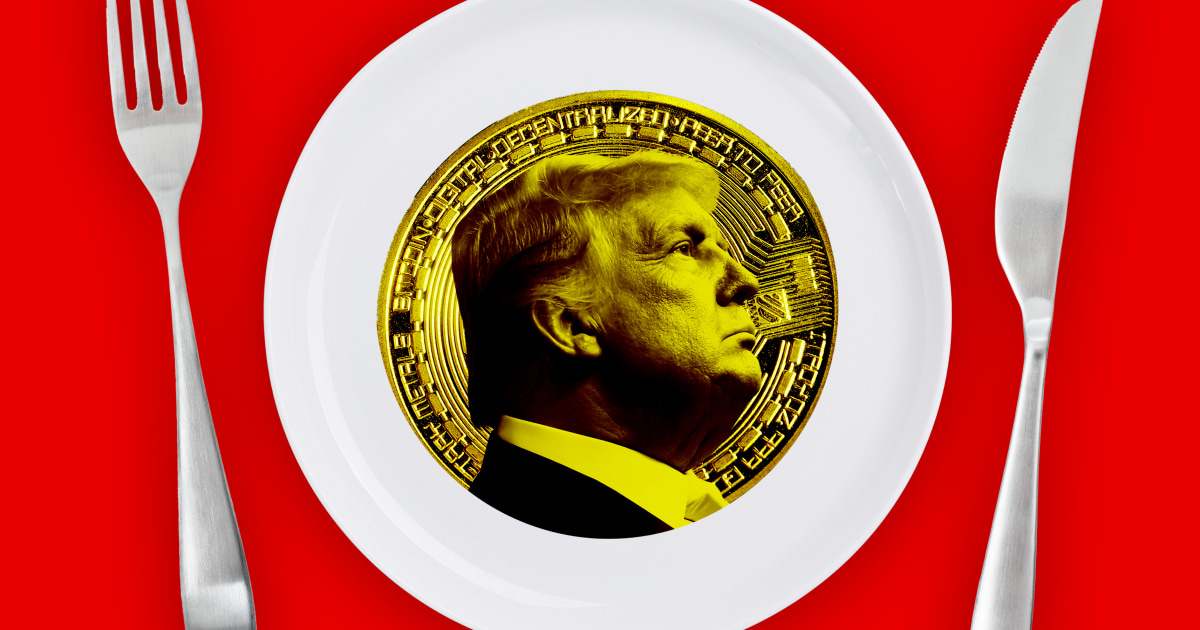
Wealthy Crypto Investors Dine with Trump in Exclusive Event
More than 200 affluent, predominantly anonymous cryptocurrency investors are set to gather in Washington on Thursday for a dinner with former President Donald Trump. The cost of participation ranges from $55,000 to a staggering $37.7 million. This figure reflects the expenditures of the 220 individuals who won a contest granting them access to Trump by purchasing his volatile cryptocurrency token, $TRUMP, as analyzed by blockchain analytics firm Nansen.
Substantial Investments in $TRUMP Token
The highest holders of the $TRUMP token at a designated time, determined by the event’s organizers, earned their spots at the dinner. According to Nansen’s findings, the total amount spent by the contest winners reached $394 million, although some have since sold parts of their holdings or liquidated them completely. The spending varied widely among participants, with the top seven winners each investing over $10 million, while the lowest 24 spent under $100,000. Notably, 67 winners, representing roughly a third of the group, invested over a million dollars each, resulting in an average expenditure of approximately $1.79 million per winner.
Fluctuating Value of $TRUMP Coin
Similar to many meme coins, the value of $TRUMP experiences significant volatility, as reported by CoinMarketCap, a platform that monitors cryptocurrency prices. Nansen tracked the amounts each contest winner spent on their $TRUMP tokens at the time of purchase. The top 220 winners received invitations to a black-tie optional dinner at the Trump National Golf Club in Washington, D.C. Although the contest’s website states that Trump “is appearing at the dinner as a guest and not soliciting any funds for it,” it also reveals that 80% of the $TRUMP project is owned by two companies affiliated with Trump, namely CIC Digital and Fight Fight Fight LLC.
Trump’s Business Interests and Personal Profit
The personal cryptocurrency initiative and accompanying contest highlight the various ways Trump has seemingly leveraged his presidential position for personal financial gain. His business interests are managed in a trust overseen by his son, Donald Trump Jr., and he has intertwined his family businesses with his official duties, including hosting events like this crypto dinner at his clubs and making exclusive political announcements via his social media platform, Truth Social. The $TRUMP cryptocurrency also generates revenue for the Trump-linked entities that developed it through transaction fees. Chainalysis, a cryptocurrency research firm, estimated that nearly $900,000 in transaction fees was generated within the first two days following the contest’s announcement.
Exemptions for Presidential Financial Gain
While most federal employees are prohibited from using their official positions for financial benefit, the president enjoys significant exemptions. Dan Weiner, the director of the Elections and Government Program at the Brennan Center for Justice, noted that “the president is not subject to the broad prohibition on conflicts of interest that affects almost everyone else who works for the federal government.” He remarked that this situation is quite extraordinary, even by the standards of the previous Trump administration, which saw various individuals doing business at the president’s hotels. However, he added that such actions do not necessarily violate legal statutes.
Political Donations and Contest Winner Profiles
In a statement, White House spokesperson Anna Kelly emphasized, “The President is working to secure GOOD deals for the American people, not for himself. President Trump only acts in the best interests of the American public — which is why they overwhelmingly re-elected him to this office, despite years of lies and false accusations against him and his businesses from the fake news media.” Even the lowest-ranked winners spent far more than the legal limit of $3,500 for direct donations to political candidates in the U.S.
Winners’ Identities and Foreign Participation
The highest spender was identified as Justin Sun, a Chinese-born crypto entrepreneur who recently became a citizen of St. Kitts and Nevis. Sun is currently facing a lawsuit from the Securities and Exchange Commission, although proceedings have been paused during the Trump administration. Most other contest winners remain largely anonymous, known only by pseudonyms and their cryptocurrency wallet addresses. Research by independent crypto analyst Molly White indicated that a significant number of attendees appear to be foreign nationals. White analyzed the transaction history of the winning wallets and found that 72% of the 220 wallets belonged to individuals using exchanges not legally available to U.S. citizens.
Legal Implications of Foreign Participation in Political Donations
The presence of numerous non-U.S. citizens among the contest winners raises concerns, as it is generally illegal for foreign nationals to contribute to American political campaigns. Weiner highlighted the irony of the situation, stating, “It’s an incredible contrast. We have very strict laws that prohibit foreign nationals from making campaign donations. So the great irony here is that many of the people buying this currency would not be eligible to donate $100 to the president’s campaign.” He pointed out that existing laws aim to prevent undue foreign influence in U.S. politics, a goal that is recognized by both political parties.


